What Triumph accomplished with its new pair of 400s is nothing short of remarkable. MSRPs of just $5,795 for the 2024 Speed 400 and $6,795 for the 2024 Scrambler 400 X? What? AND they got there during this insane period of weird COVID-related inflation and supply chain quagmires? AND with both bikes really being distinct? What?
Valencia, Spain. With such impressively low prices —particularly for a premium brand like Triumph— comes a series of questions as obvious as they are unavoidable : what quality of product are buyers getting exactly? Where have corners been cut? Are these real Triumphs? Basically : what’s the catch? Since some brands are actually pretty good at that small displacement, low cost game, but others just aren’t, being suspicious in those cases is absolutely warranted. I was.
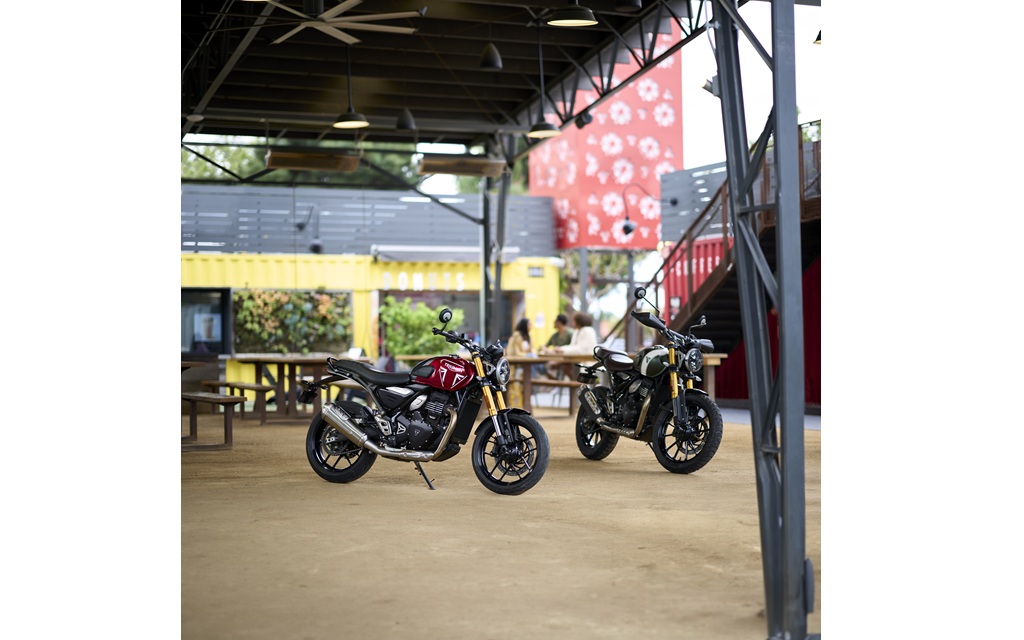
I first saw the 2024 Speed 400 and Scrambler 400 X in the flesh in a hotel meeting room, in Valencia, Spain, where Triumph officially presented the bikes to the world press. There were a few models on the floor, some stock and others demonstrating accessories. I paced quite a bit around both stock 400s, sat on them, got off, kneeled to get a closer look, and repeated. I was looking for the obvious cheap stuff. For sure cost cutting signs would jump at me. It was inevitable with MSRPs that low. Or so I thought. But I couldn’t find much. The hand controls look a bit cut-rate and the overall proportions are a bit on the small side, as if the new bikes were a 90 percent-sized version of their large displacement equivalents. But other than that, what was in front of me looked just fine and offered every bit of the attention to details I’m used to seeing on Triumphs costing multiple times more.
It’s no secret that an important reason Triumph is able to offer such attractive prices is its partnership with Bajaj, a gigantic motorcycle manufacturer based in India. Those partnerships aren’t a new thing and can take many shapes, but I had never heard of one quite like that. According to Triumph, down to their last detail, both new 400s have been fully developed and tested in Hinckley, by the British manufacturer himself and up til the point the final result was satisfactory. Then, what are essentially the blueprints of the project was put in Bajaj hands with the instruction to obtain a product of equal quality as what would have come out of Britain. Quality control is assured by full-time Triumph staff in India, while significant economies of scale come from Bajaj’s multimillion motorcycles manufacturing business. Interesting stuff and, who knows, maybe something we’ll see more of in the future.
Even when taking a more in-depth look at how the Speed and Scrambler are built, corner-cutting signs still aren’t obvious. First, although they arrive to market together and share the same all-new 398 cc single producing 39,5 hp at 8,000 rpm and 27,6 lb-ft of torque at 6,500 rpm, each of the new 400s is its own model. Which is somewhat surprising as producing one platform that would then be dressed up as a naked and a scrambler would have made all the sense in the world as far as reducing development and production costs. But the fact is Triumph really did develop two distinct bikes. To begin with, although the frames are built from the same material and are of the same type, their geometry is different, an essential step if giving each model its own appropriate feel is a priority, Triumph says. Some clever thinking also helped achieve that goal.
For example, the more relaxed Scrambler needed a wheelbase about 40 mm longer than the nimbler Speed. The first half came from the longer frame, but for the second, instead of using a longer swingarm on the Scrambler, costs were saved by keeping the same part on both bikes and simply pulling back the rear wheel 20 mm in the swingarm and adding a couple links to the Scrambler chain. Smart, simple, effective. The same kind of thinking went into getting an identical final drive ratio for both bikes even if the larger diameter adventure-type rear tire of the Scrambler has a considerably bigger circumference than the sportier low-profile rear tire of the Speed. While Triumph did go through the trouble of using a slightly narrower 10-spoke, 17-inch rear wheel on the Scrambler (3,5 in vs 4 in), it simply installed a one-teeth smaller sprocket on the output shaft of the Scrambler to achieve the same final drive ratio as the Speed. No changes whatsoever were required to the transmission or engine. Smart, simple, effective.
As for the rest of the main differences between the models, they include longer travel suspension on the Scrambler; different seats; a 2,5-inch wide by 19-inch front wheel on the Scrambler vs the 3-inch wide by 17-inch wheel of the Speed; a 300 mm front brake disc on the Speed vs 320 mm on the Scrambler; and several cosmetic changes like different exhaust guards, paint schemes, mufflers and front fenders.
I was assigned a Speed 400 when we left the hotel the next morning. Just like I did the previous evening, I looked for signs of any lack in quality, but the first riding impression was also quite favorable. Now, this is an entry level, 40 hp, inexpensive motorcycle we’re talking about, so expectations have to match that. Still, I couldn’t find anything fundamentally wrong with the Speed 400. It is a little on the small side, especially for the big and tall crowd, but not to the point of being annoying at all or even feeling cramped. Call it compact, light and narrow. In town, where we first rode, the ultra-nimble, 170 kilos wet Speed 400 feels right at home. I was pleasantly surprised by the new single. About 40 hp isn’t uncommon for the 300 to 400 cc class, but the very decent torque offered by Triumph’s mono is. Thanks to that torque, the first gears don’t have to be too close together, the result being a feeling of normal use quite refreshing in this category where constant shifting and high revs is the norm. Turns out there really is no replacement for displacement, especially when you realize 400 cc is a third more cylinder volume than 300 cc. Combine that displacement with the naturally torquey nature of a single and you end up with a surprisingly usable little engine.
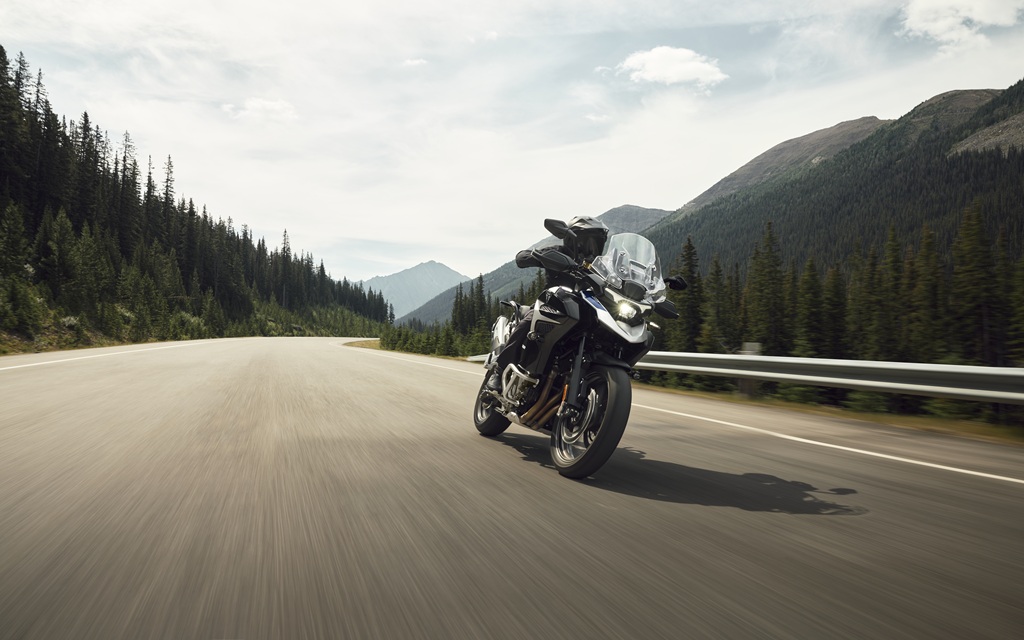
We didn’t stay too long in town and headed for the mountains where our lead rider’s pace made it clear no one was expecting us to take it easy on the smallest Triumphs since John Bloor relaunched the brand in the 90s. The Speed 400 is a low bike with a 790 mm seat height. It’s light and very narrow between the rider’s legs. The ergos are typical sports-naked, meaning a sportbike-ish bend in the legs, a straight torso and weightless hands on a regular width handlebar. With a single disc pinched by a 4-piston radially mounted caliper at the front, braking isn’t impressive, yet perfectly adequate, and ABS is standard. The rest of the chassis is more than decent: there’s a sturdy 43 mm, non-adjustable fork in front and a preload adjustable monoshock with external reservoir at the back, while the 10 spoke 17-inch wheels are wide enough to wear good-sized Metzeler Sportec M9RRs (110/70 up front and 150/60 at the back).
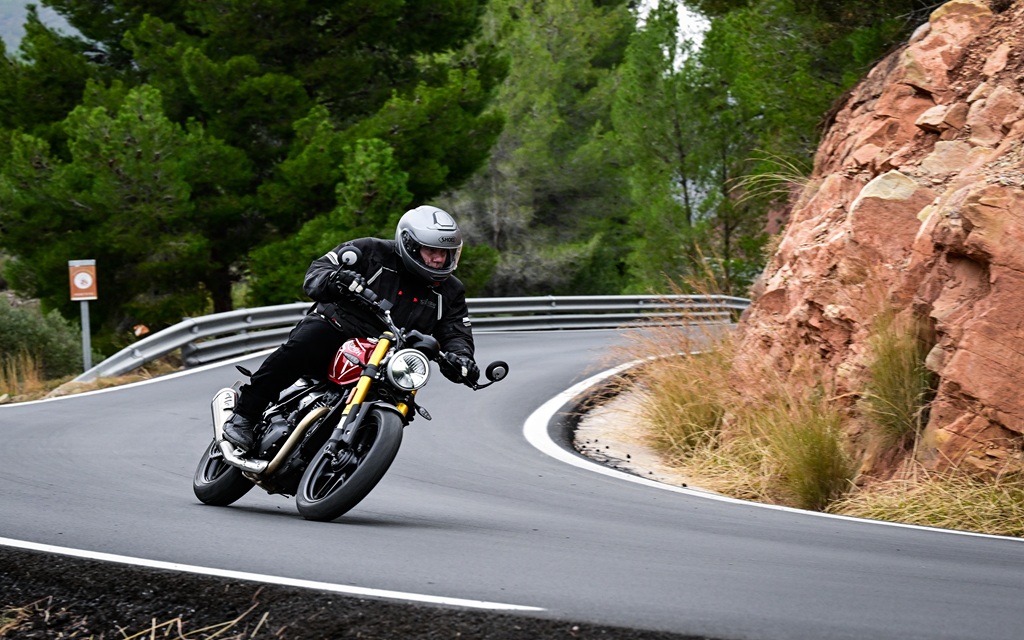
Not only did the whole package handle a very fast pace well, it did it without signs of being abused: the steering was light and precise, the rolling chassis didn’t show signs of flex whatsoever, the suspension took everything without bouncing around in protest, the brakes did their job and stability was never an issue. To top it all, the torque-rich single made coming out of turns enthusiastically —as much as 40 hp allows— as easy as twisting the throttle. No need to perfectly match the revs with the one appropriate gear on this bike.
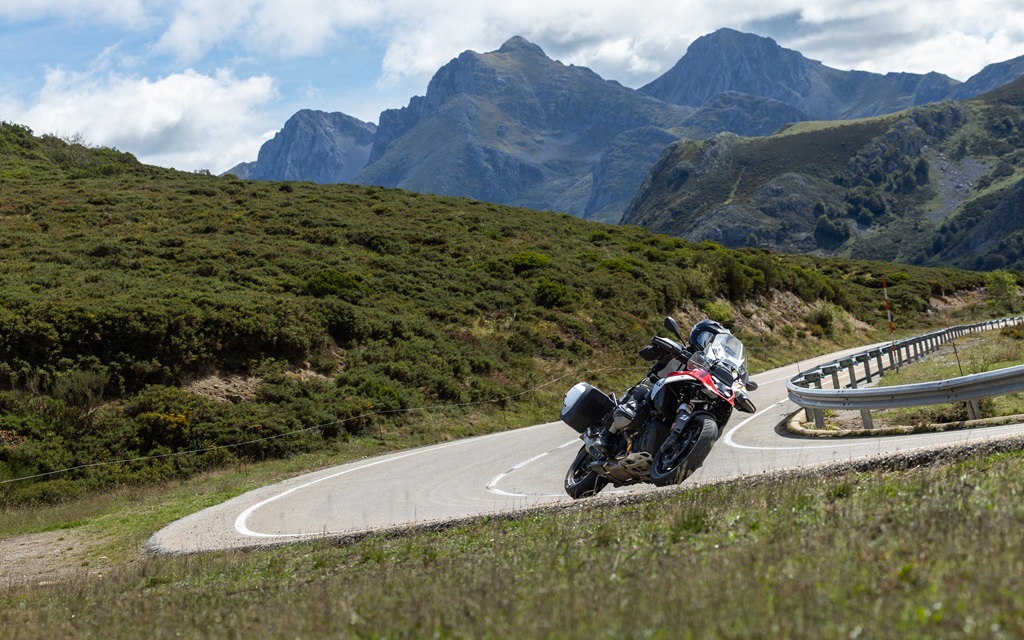
In the afternoon, I switched to the Scrambler 400 X and immediately noticed it fit me better. Taller with its 825 mm seat, it squeezes legs less than the Speed while the wider handlebar plays its role in the more open and relaxed feel of the ergonomic triangle. Slightly heavier at 179 kilos fully fueled, built with a 40 mm longer wheelbase and offering 150 mm of suspension travel at both ends (10 mm more up front and 20 mm more at the back than the Speed), the Scrambler feels more like a regular-sized motorcycle than the compact Speed, although that’s by no means a criticism of the fun little naked, but rather just a fact.
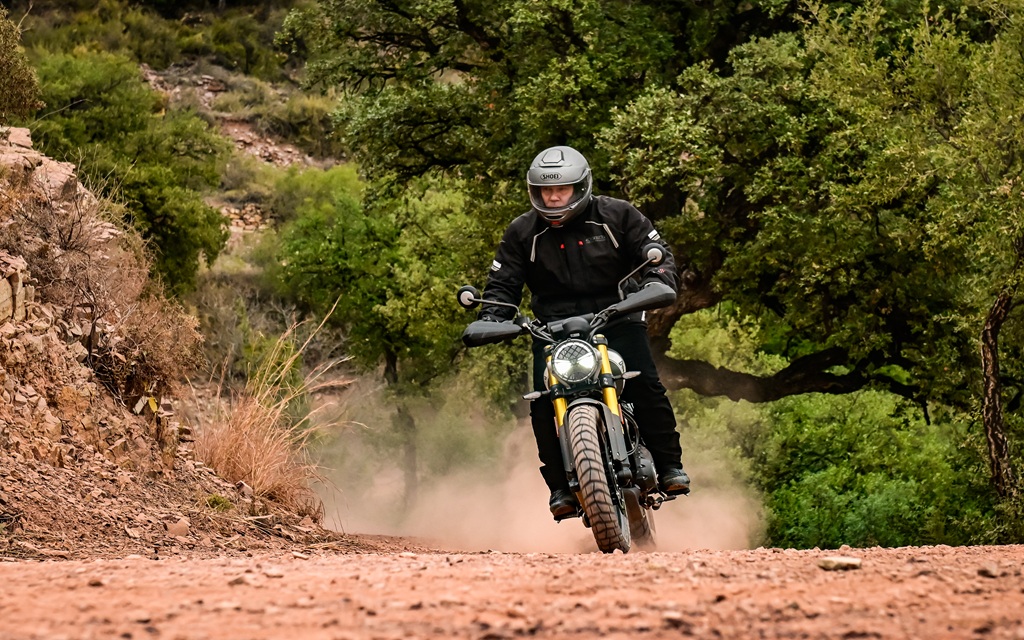
In terms of handling, the Scrambler sustained perfectly well the exact same fast pace on the same endlessly twisty narrow mountain roads of the beautiful Spanish countryside. Just like the Speed 400 in the morning, it behaved like a proper, well-built motorcycle and never showed signs of cheapness. If there’s one area it’s lacking, it’s off-road where the suspension just isn’t designed to handle anywhere near a fast pace on nasty terrain. The Scrambler 400 X does just fine on hard-packed dirt or gravel at a mellow pace, so leaving pavement is absolutely possible on it, but it’s just not made to be jumped or ridden remotely hard off-road. Even with that clear road bias, Triumph gave it an ABS system that can be deactivated, a nice feature to have.
Because of their remarkably low price along with their unusual (for a brand like Triumph) complete manufacturing outsourcing, I had to see and feel good motorcycles to believe the Speed 400 and Scrambler 400 X were. And that’s exactly what I saw and felt. I’m still a bit shocked that this Triumph/Bajaj partnership worked out so nicely, but in the end, what’s important is that buyers are getting really great little motorcycles at an excellent price. Thanks to the torquey single, buyers are also getting bikes that may be classified as entry-level, but that end up being enough fun and well-behaved to keep riders entertained for a good little while. The motorcycle industry needs more of this.